How to modify a hang-on-back filter
A hang-on-back filter is the workhorse of the hobby, but the version that comes out of the box is rarely the best it can be. The disposable cartridge is a weak point, the flow can be too strong for delicate fish, and the waterfall can be noisy. A handful of cheap, no-skill modifications fix all of that and make a basic filter punch well above its price.
Published 21 June 2026 · Last updated 21 June 2026 · 10 min read
Why modify a hang-on-back filter
The hang-on-back is the most common beginner filter, and rightly so (see the filter guide). But the box it comes in is built to a price, and a few cheap modifications make it filter better, run quieter, and suit fish it would otherwise be too rough for. None of it needs special skill or tools.
The weak point of almost every hang-on-back filter is the disposable cartridge it ships with. The rest of the unit is good; most modifications are simply about getting more out of it. You will benefit most if you keep shrimp or fry (a pre-filter sponge), a betta or other slow, long-finned fish (a flow baffle), a planted tank (a surface skimmer and more biological media), or if the waterfall trickle is driving you up the wall.
Before you start
Two ground rules keep these modifications safe for you and for your fish.
The materials you want are all aquarium-safe and cheap: sponge, filter floss or wool, ceramic or sintered biological media, food-grade plastic for any DIY parts, and cyanoacrylate gel super glue for fixing pieces together (the setup guide covers which glues are safe). Avoid anything with dyes, fragrances, or solvent additives.
Keep your cycle in mind as you work. Your beneficial bacteria live in the filter media, so any change that strips or sterilises it can crash the tank. The cartridge swap below explains how to upgrade media without losing the colony, and the same principle applies to every modification: never clean filter media in tap water, and never replace it all at once.
The modifications
Each modification stands on its own, so do as many or as few as you like. Open the ones you are interested in.
Replace the cartridge with proper media
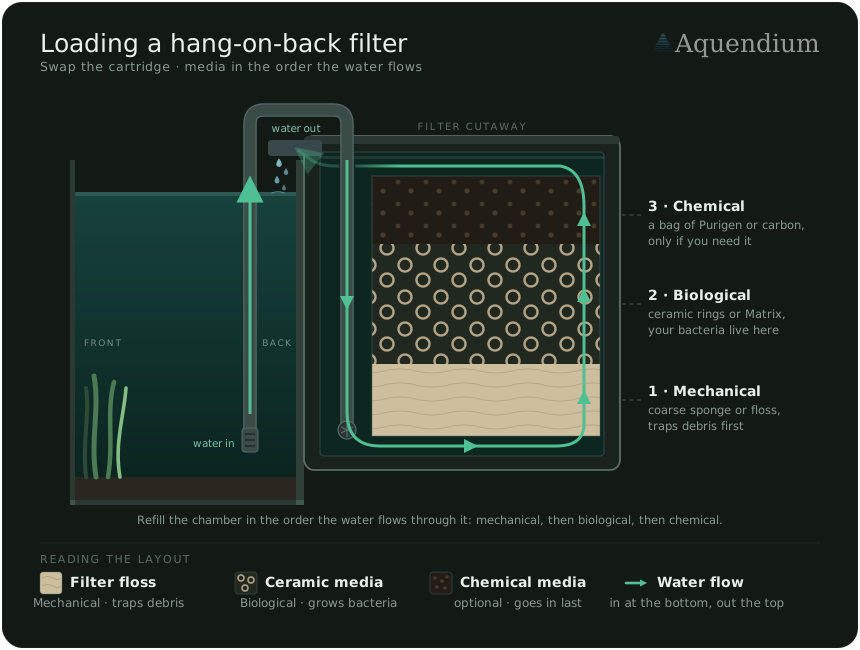
The single most worthwhile modification. Most hang-on-back filters ship with a disposable cartridge (a thin sponge wrapped around carbon) that you are told to replace every month, which throws out your bacteria each time. Swapping it for reusable media filters better and protects your cycle.
How to do it
- Remove the plastic cartridge and its frame.
- Refill the chamber in the order the water flows through it: coarse sponge or filter floss first (mechanical), then biological media such as ceramic rings or sintered glass like Seachem Matrix.
- Add chemical media last and only if you need it, such as a bag of Seachem Purigen or activated carbon.
- Use a media bag or a piece cut to fit so nothing tumbles into the impeller, and leave a clear path so water flows through the media rather than around it.
Add a pre-filter sponge
A sponge that slips over the intake tube. It stops shrimp, fry, and small fish being sucked in, keeps debris and plant bits out of the impeller, and adds biological surface area. It is close to essential for shrimp and breeding tanks.
How to do it
- Buy a pre-filter sponge sized to your intake, or cut a hole through a piece of coarse sponge, and push it onto the intake tube.
- Rinse it in old tank water during your weekly water change; it clogs faster than the main media, which is the point, as it protects everything downstream.
A bonus: a spare pre-filter sponge running on your main filter quietly seeds itself with bacteria, ready to drop into a quarantine tank at a moment's notice.
Baffle the outflow
Hang-on-back filters can push too much current for bettas, gouramis, and other slow, long-finned fish, and for shrimp and fry. A baffle spreads or slows the returning water.
How to do it
- The simplest baffle is a strip of sponge wedged where the water pours back in, which diffuses the flow.
- For more control, clip a cut-down food-grade container or bottle over the return lip to widen and soften the outflow, or fit a printed baffle.
- Aim the flow along the glass rather than straight down into the tank.
Do not block the outflow so completely that water backs up inside the filter and overflows; always leave a clear path for the water to return.
Quieten the waterfall
The trickling waterfall sound comes from the water level sitting too far below the return lip, so the water drops through air. It is an easy fix.
How to do it
- Raise the tank's water level so the return sits closer to the surface. This is the most effective fix, so keep an eye on it as evaporation lowers the level.
- Keep the filter box itself full and primed, so it is not gurgling air.
- A sponge baffle at the return also muffles the splash.
A sudden increase in noise is usually a clogged intake or a low water level, not a failing filter. Top up the water and clean the intake before assuming the worst.
Add a surface skimmer
A surface skimmer draws water from the very top of the tank, clearing the oily biofilm that builds up on a still surface and improving gas exchange. It is most useful in planted or low-flow tanks.
How to do it
- Fit a clip-on surface-skimmer intake if your filter offers one, or add a DIY skimmer box or an intake extension that pulls from the surface.
- Where you can, keep drawing from lower down as well, so you are not only skimming the top.
Keep the water level topped up: a skimmer stops working, and starts sucking air loudly, the moment the level drops below its mouth. Pair it with a pre-filter sponge if you keep fry, so they are not drawn in.
Australian notes
Parts are easy to find. Pre-filter sponges, biological media (Seachem Matrix, Seachem Purigen), filter floss, and replacement sponges are stocked by Petbarn, Petstock, and dedicated aquarium shops. Aqua One, Fluval, and AquaClear spares and refillable media baskets are widely available here, which is worth knowing if you would rather buy a drop-in media basket than improvise one.
Check what you already have. Some hang-on-back filters sold in Australia, including parts of the Aqua One range, already come with refillable media baskets rather than disposable cartridges. Look inside yours before buying anything, you may only need to add media.
Leave the electrics alone. Australian 240 V mains makes the safety rule above non-negotiable: modify the water path, never the motor. If your filter is an uncertified overseas import, it is already a risk near water, so do not compound it by altering it.
This guide builds on the filter guide, which compares the filter types and covers media in more depth. To protect your cycle through any change, see the cycling guide and water changes guide. Browse fish that appreciate the gentler flow in the species directory.