Cloudy and green water: quick fixes
A tank that turns cloudy or green, often overnight, is one of the most common beginner scares, and one of the most harmless. Almost always it is a passing phase rather than an emergency, and the colour of the water tells you which one you have. This is a quick troubleshooter: find the card that matches your water below, open it, and follow the fix. The single rule that applies to all three is the same, do not panic and tear the tank apart, because that usually makes it worse.
Published 1 July 2026 · Last updated 1 July 2026 · 6 min read
Match your water to the card below and open it for the fix.
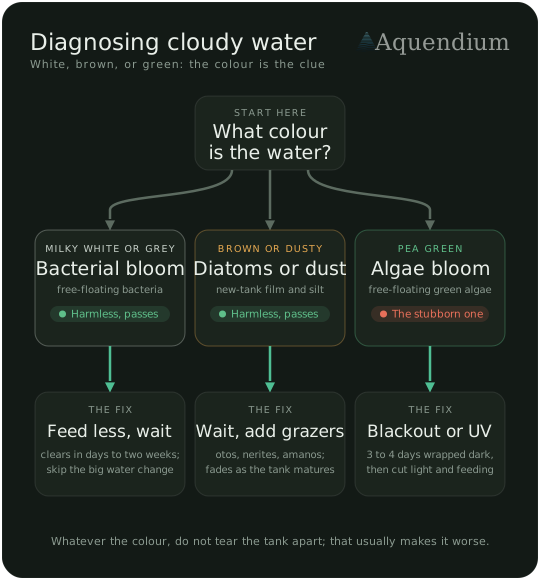
Cloudy white or grey water: a bacterial bloom
Milky, white, or grey haze throughout the water is a bacterial bloom: a sudden explosion of free-floating bacteria feeding on dissolved nutrients. It is extremely common in the first few weeks of a new tank, when populations boom before they balance, and in established tanks it follows overfeeding, a dead fish, or a big disturbance of the substrate. The bloom itself is harmless; it is a sign of excess organic waste, not a disease.
What to do:
- New tank? Wait it out. A bloom during cycling is normal and almost always clears on its own within a few days to two weeks. Keep cycling as usual (see how to cycle a new aquarium).
- Feed less. Overfeeding is the number one cause in an established tank. Cut back and remove any uneaten food.
- Find the source. Check for and remove a dead fish, rotting plant, or buried leftover food.
- Do not overreact. A large water change, a scrubbed filter, or a bottled "cloudy water" clarifier treats the symptom, not the cause, and in a young tank a heavy clean sets the cycle back and can prolong the bloom. Small water changes are fine.
- Make sure the filter is running well, with good flow, so it can clear the water as the bloom fades.
Brown or dusty water: diatoms and new-tank dust
A brown, tan, or dusty look usually means diatoms, the brown film that coats the glass, substrate, and plants of almost every new tank. Diatoms bloom in the first few weeks to a couple of months, feeding on the silicates and excess nutrients of an immature tank, and fade on their own once it matures and competition sets in. They are harmless, just unsightly.
What to do:
- Be patient. Diatoms are a phase, not a permanent problem. They clear as the tank matures, often within a few weeks. Wipe the glass and siphon the film off surfaces at water changes.
- Add a cleanup crew. Otocinclus, nerite snails, and amano shrimp graze diatoms enthusiastically (see our shrimp guide).
- Keep the light modest and do not overfeed.
Two lookalikes worth ruling out. If the tank was only just set up, brief brown or grey cloudiness is simply substrate dust; it settles within a day or two with the filter running, and rinsing the substrate before use prevents it next time. If the tint is a clear tea or amber colour rather than a haze, that is tannins leaching from driftwood, which is harmless and cosmetic and clears with water changes and Seachem Purigen. Our algae guide covers diatoms in more depth.
Green water: an algae bloom
Pea-green, cloudy water is a bloom of free-floating green algae, the same thing that turns a summer pond green. It is driven by too much light (a long photoperiod, or worse, direct sunlight) plus excess nutrients from overfeeding or overstocking. It will not harm your fish directly, but it blocks light to your plants, looks terrible, and a heavy bloom can crash the oxygen level overnight, so it is worth clearing.
Green water is the stubborn one, because the algae reproduces so fast that water changes alone rarely clear it: whatever you leave behind reblooms within days. Tackle the cause and the algae together:
- Cut the light first. Shorten the photoperiod to six or seven hours, lower the intensity, and above all get the tank out of any direct sunlight. A sunny window is the usual culprit.
- Cut the fuel. Stop overfeeding and reduce stocking so there are fewer nutrients feeding the bloom.
- Use a cure that actually works. A three to four day total blackout (wrap the tank so no light gets in, lights off, no feeding) starves the algae, and your plants shrug it off. A UV steriliser or clarifier kills the algae as the water passes through and clears the tank in a few days, and is the most reliable fix of all.
- Keep it gone. Once clear, hold light and nutrients in balance and grow fast-growing plants to outcompete the algae, or it returns. See our lighting and algae guides.
What not to do, and when to worry
The mistake nearly everyone makes with cloudy or green water is over-reacting: a huge water change, a scrubbed-out filter, and a dose of clarifier, all at once. In a young tank that resets the very biology that would have fixed the problem, and it commonly makes a bloom last longer. Identify the cause, remove it, and give the tank time. Steady, regular water changes help; drastic ones usually do not.
Related reading: how to cycle a new aquarium, types of aquarium algae, and aquarium water changes, or browse the species directory.